

For many people with knee arthritis, there comes a point where over-the-counter pain relievers no longer provide enough relief, but surgery doesn’t feel like the right next step. Injection treatments can fill that gap, helping to reduce pain and keep you active without an operation.
Two of the most common options are viscosupplementation, which adds lubrication to the joint, and platelet-rich plasma (PRP), an orthobiologic treatment that uses your body’s own healing factors as part of a regenerative approach to joint care. This guide explains how each one works, who tends to benefit most, and how to decide which may be right for you.
Why Injections Are Used for Knee Osteoarthritis
Osteoarthritis develops as the cartilage cushioning your knee wears thin, leaving the bones with less protection. Pain, stiffness, and swelling often follow. Injections do not rebuild worn cartilage, but they can ease symptoms and may help you stay active longer before surgery is considered.
They are usually offered after rest, activity changes, weight management, and physical therapy have fallen short. A thoughtful arthritis management plan often layers several of these tools rather than relying on one.
Understanding Viscosupplementation
Healthy joint fluid is thick and slippery, like motor oil for the knee. In arthritis, that fluid thins and loses some of its protective quality. Viscosupplementation injects hyaluronic acid, a substance naturally found in joint fluid, to add lubrication and cushioning.
Treatment may involve a single injection or a short series spread over several weeks, depending on the product. Several hyaluronic acid products are FDA-approved for knee osteoarthritis. Relief may begin within weeks and can last for months, though responses vary widely from person to person.
What Is Platelet-Rich Plasma (PRP)?
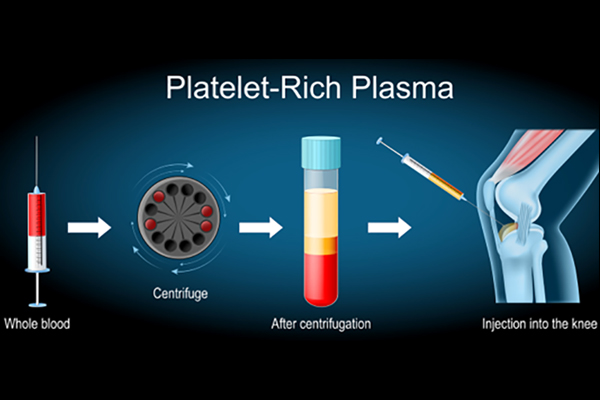
PRP starts with a small blood draw from your arm. The blood is spun in a centrifuge to concentrate platelets, which carry growth factors involved in inflammation and tissue repair. That concentrate is then injected into the knee.
Because PRP comes from your own blood, the risk of an allergic reaction is low. Research suggests it may help some people with mild to moderate arthritis, but study quality varies and PRP preparations are not standardized. That is worth knowing before you decide.
Viscosupplementation vs. PRP: Key Differences
- Source: Hyaluronic acid is a prepared product, while PRP is made from your own blood.
- Goal: Hyaluronic acid aims to lubricate and cushion the joint, while PRP aims to calm inflammation through biologic signaling.
- Schedule: Hyaluronic acid may require one injection or a short series. PRP is often given once or in a few sessions.
- Coverage: Insurance more often covers viscosupplementation when criteria are met, while PRP is frequently self-pay. Check with your plan.
- Best stage: Both tend to work better in mild to moderate arthritis than in advanced disease.
Which Injection May Fit Your Situation?
Viscosupplementation is often considered for mild to moderate arthritis, especially when cortisone has stopped working or is a poor fit. People with diabetes, for example, may prefer to avoid cortisone because it can temporarily raise blood sugar.
PRP may appeal to patients who want a biologic option made from their own blood, or to active adults with earlier-stage arthritis. Blood thinners, platelet disorders, or an active infection can affect whether PRP is appropriate. Neither injection is a dependable fix for severe, bone-on-bone arthritis, where results are less predictable.
What About Cortisone and BMAC?
Cortisone injections can calm a painful flare quickly, but the relief is usually temporary and repeated use is generally limited. Bone marrow aspirate concentrate (BMAC) uses cells concentrated from your own bone marrow and is sometimes discussed for arthritis, though evidence is still developing. A specialist can explain where each option fits.
What to Expect After an Injection
Most people go home the same day and return to light activity quickly. A day or two of soreness is common, and PRP can cause a short flare of aching before improvement. Your doctor may ask you to pause certain anti-inflammatory medications around PRP, so follow their instructions. Benefits typically build gradually rather than appearing overnight.
When Injections Are No Longer Enough
Injections are tools for managing symptoms, not a promise that surgery can be avoided forever. If relief fades or daily function keeps declining, it may be time to look at replacement options.
Depending on how much of the joint is affected, a surgeon may discuss partial knee replacement, robotic-assisted knee replacement, or same-day knee replacement. Moving to surgery is not a failure of injections. It is simply the next step when they stop doing enough.
Frequently Asked Questions
What is the difference between viscosupplementation and PRP for knee arthritis?
Viscosupplementation injects hyaluronic acid to lubricate and cushion the joint. PRP injects a concentrate of your own platelets to help reduce inflammation. They work through different mechanisms, and the better choice depends on your arthritis stage and goals.
Which is better for knee arthritis, PRP or hyaluronic acid injections?
Neither is clearly better for everyone. Research results vary, and both tend to help mild to moderate arthritis more than advanced disease. A knee specialist can recommend one based on your symptoms, health, and imaging.
How long do PRP and viscosupplementation injections last?
Relief often lasts several months, but duration varies widely. Some people feel better for a year or more, while others notice little change. Your doctor can set realistic expectations for your knee.
Does insurance cover PRP or viscosupplementation for knee pain?
Insurance more often covers viscosupplementation when plan criteria are met, such as prior conservative treatment. PRP is frequently self-pay. Coverage differs by plan, so confirm with your insurer before scheduling.
Can I get PRP or hyaluronic acid injections if I have bone-on-bone arthritis?
Sometimes, but results are less predictable when cartilage is largely gone. Your doctor may still try an injection for temporary relief or discuss surgical options if advanced arthritis limits your function.
Find the Right Option for Your Knee
If knee pain is limiting your routine, an evaluation can clarify which treatments fit your arthritis and your goals. You can request an appointment or read the first visit guide to know what to bring.
Reference Links:
AUTHOR: Richard Boe, M.D., FAAOS – Board-Certified Fellowship-Trained Hip & Knee Specialist
Richard Boe, M.D., FAAOS is a fellowship-trained orthopedic surgeon specializing in adult reconstruction of the hip and knee. He practices with Resurgens Orthopaedics in the Atlanta suburbs, providing comprehensive joint care to patients in Austell, Douglasville, Vinings, and West Cobb, Georgia. Dr. Boe is dedicated to restoring mobility, relieving pain, and delivering patient-centered care through both advanced surgical techniques and thoughtful non-surgical management.
Credentials & Recognition
Dr. Boe completed his Adult Reconstruction Fellowship at the Hospital of the University of Pennsylvania. He finished his Orthopedic Surgery Residency at Marshall University School of Medicine and earned his Doctor of Medicine degree from Virginia Commonwealth University School of Medicine. He also holds a B.S. in Biomedical Engineering from Virginia Commonwealth University, graduating magna cum laude with University Honors.
Dr. Boe is a Fellow of the American Academy of Orthopaedic Surgeons with accolades including the Dr. Russell P. Seneca Award for Excellence in Surgery and multiple academic scholarships. Dr. Boe has presented his research at national meetings and has published on topics such as soft-tissue balancing in total hip arthroplasty and management of persistent wound drainage after joint replacement.
Clinical Expertise
Dr. Boe specializes in advanced hip and knee replacement procedures, utilizing modern surgical techniques to optimize alignment, stability, and long-term function. He also provides comprehensive non-surgical arthritis management to help patients reduce pain and maintain joint health when surgery is not yet necessary. With a background in biomedical engineering and extensive clinical training, Dr. Boe combines technical precision with compassionate care. His approach emphasizes individualized treatment plans designed to achieve faster recovery, improved mobility, and lasting outcomes.
Medical Disclaimer: This information is for educational purposes only and does not constitute medical advice. For diagnosis and treatment recommendations, please consult with Dr. Boe or another qualified orthopedic specialist.
Content authored by Dr. Richard Boe and verified against official sources.